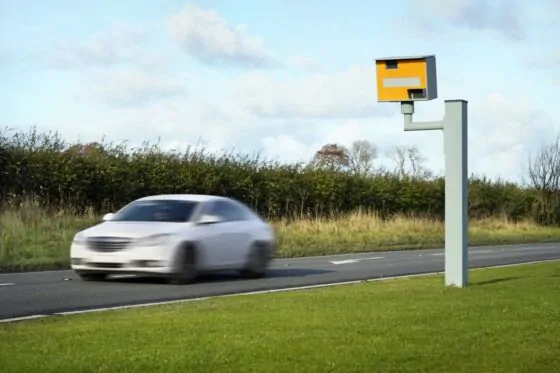
🚓 1. Much Harsher Penalties for Dangerous Driving
One of the biggest changes in 2026 is the expansion of what counts as a criminal offense in traffic.
🔹 What’s new?
- Driving in a way that seriously endangers others (e.g. extreme speeding, reckless behavior) can now lead to criminal charges.
- Courts may impose prison sentences of up to 5 years for the most dangerous cases.
- Illegal street racing, drifting, and stunt riding (e.g. riding on one wheel) are now clearly defined as offenses — even if no accident happens.
📌 Example:
If a group of drivers organizes an illegal street race in a city, all participants and organizers can face court proceedings — even if nobody is injured.
Bottom line: It’s no longer “just a ticket.” Risky behavior can now mean a criminal record.
🚫 2. Car Confiscation and Lifetime Driving Bans
The new law greatly expands when the state can take your car away.
🔹 Key changes:
- If a driver has 1.5‰ blood alcohol level or more, the court must order confiscation of the vehicle.
- If someone repeatedly drives despite a court ban, the judge can impose a lifetime driving ban and seize the car.
- Confiscation can also apply when the car belongs to someone else but is used in a serious offense.
Bottom line: In extreme cases, you don’t just lose your license — you lose your car too.
🚦 3. No More “Leniency” for Speeding – Even Outside Cities
Until now, losing your license for speeding over +50 km/h mostly applied in built-up areas. That changes in 2026.
🔹 New rule:
- From March 2026, exceeding the speed limit by more than 50 km/h outside urban areas (on single-carriage roads) also means:
👉 Immediate loss of your driving license for 3 months.
📌 Example:
Driving 145 km/h in a 90 km/h zone outside town? Your license is gone for 3 months — just like in the city.
Bottom line: High speed anywhere can now cost you your license.
📊 4. Penalty Points – Harder to Reduce, Easier to Lose Your License
The penalty point system has also become stricter.
🔹 What changes?
- Some serious offenses can no longer be reduced by attending safety courses.
- Points stay on your record longer than before.
- This means you can reach the maximum limit faster and lose your license more easily.
Bottom line: One bad year of driving can now have long-term consequences.
🧒 5. Driving at 17 – With Strict Conditions
A big and controversial change: 17-year-olds can now get a category B license — but only under strict rules.
🔹 Conditions:
- The young driver must:
- Drive for 6 months with an experienced adult supervisor.
- Have zero tolerance for alcohol.
- Remain in an extended probation period.
- Any serious violation can mean losing the license immediately.
Bottom line: It’s an opportunity for early experience — but with high responsibility.
🛴 6. New Rules for E-Scooters and Bicycles
The changes also affect cyclists and e-scooter users.
🔹 From mid-2026:
- Helmets become mandatory for children and teens up to age 16 when riding:
- bicycles,
- electric scooters,
- personal transport devices.
- The minimum age for riding an e-scooter rises from 10 to 13.
Bottom line: Better protection for young users and clearer rules for parents.
🧾 Summary – Road Law Changes 2026 at a Glance
| Area | What It Means for Drivers |
|---|---|
| Dangerous driving | Can now mean prison and a criminal record |
| Alcohol & recidivism | Car confiscation and lifetime bans |
| Speeding | +50 km/h = license lost even outside cities |
| Penalty points | Harder to remove, stay longer |
| Young drivers | Licenses from 17 with strict supervision |
| Scooters & bikes | Helmets mandatory for under-16s |